Showing posts with label mark liberman. Show all posts

12.06.2012

The Artist

I just realized that over there on Facebook, Language Log is using an image I created a few years ago as their profile cover. Geoff Pullum had thought a visual representation of Language Log might work as something to be incorporated into the cover for Far from the Madding Gerund, whose type is incorporated into that Facebook profile cover also.

I'm very happy to have something I did featured like this, and hey—it looks pretty good to me. How would I know, though? I'm not an artist. I have some friends and acquaintances who are very serious and talented and successful, but I am only very lightly any of those three things. Required. To be an Artist.

That does not keep me from doing stuff, though. I came into book editing at exactly the time that computers started making layout work doable by the masses (I was, and still am, a mass), and so part of my duties in book production for a small publisher has always been design work, often creating book covers and ad pieces. Some of this work has been passable, including that cover for the Language Log book, Far from the Madding Gerund. Some of it has been hasty and quite uninspired, like a cover I generated in one 30-minute stint before going away on vacation:
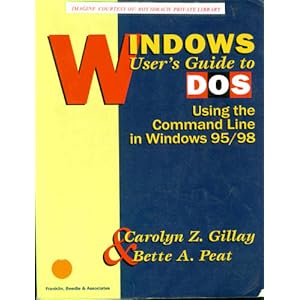


I left instructions to use this type as a possible basis for creating something else that could actually be the actual cover. When I returned from vacation the book had been shipped to press with the cover more or less exactly how I had created it, including using color swatches entirely from the readymade palette that ships with Adobe Illustrator. The book went on to sell more copies than any other book we have ever done. Art, you see, doesn't matter much when it comes to selling books about computing.

For another Windows book, I created something I liked pretty well but never used or even showed to anyone:


I think it looked too fun, though. I once was told to make sure the cover never looks more fun than the book really is, and that's probably good advice.

I've created dozens of book covers over the years, and part of the reason I know I'm not an artist is that it is never torturous for me. I always enjoy it, even when it is clearly not going well at all.

Back to Language Log—I had a few other visualizations for what Language Log Plaza might look like:


All of this is true—I am not a serious artist and only consider myself a designer when it is professionally expedient to do so (I'm a book editor, that's my self-definition)—but what is really, really true is that I have no skill as a photographer, and yet (another Language Log tie-in), I am very proud that my photograph of Mark Liberman is the one that shows up on the side when you Google Mark's name: 


Which has the background knocked out. The original photo, taken at pod in Philadelphia, looks like the one you see on the left side of the row of Mark Liberman images:

2.13.2012

Sign of the Times: Mark Liberman cited by Paul Krugman today

Here's something that would never have happened 15 years ago: A New York Times columnist citing a blogger. I'm referring to Paul Krugman today, paragraph II:
Mark Liberman, a linguistics professor at the University of Pennsylvania, provided a list of words that most commonly follow the adverb “severely”; the top five, in frequency of use, are disabled, depressed, ill, limited and injured. [Link added]

Yes, there was a time not so long ago that blogs were looked at as pretty uniformly unreliable or, worse, merely a forum for opinion unencumbered by the restrictions of factual information. In fact, that opinion still holds in some places, not always without reason. Nevertheless, these days it is commonplace for writers in mainstream publications to quote one of the (many) good, reliable blogs out there. Language Log is certainly in that category. I identified that years ago when I went about collecting their posts for Far from the Madding Gerund.

11.16.2011

Far from the Madding Eggcorn—can Webster's be far behind?

Years ago I pulled out an old sheet of newsprint, placed an acorn on it, and shot some photos with the digital camera. The day before that I had been in downtown Portland pointing the lens skyward to capture images of clouds.

The family thought it a little perverse, yes, but I had a vision; I was getting ready to build the cover of Far from the Madding Gerund, the collection of Language Log posts we were preparing for publication.

An acorn? For that? True, Geoff Pullum had imagined a large office building labeled with "Language Log," as if the blog itself had a physical location, with professional linguists in their offices all day long cranking out blog posts, running down the hallway to the copy room, ordering take-out together for a lunchtime meeting. A very romantic take on things, not unlike the announcement you hear on Car Talk when they give the address as "Car Talk Plaza." I messed around with it a little, like this:

and this:
also this:
this, too:
and even this:
But I kept going back to the acorn as the one true visual symbol of Language Log. It was the acorn, after all, that had inspired the word "eggcorn," which Mark Liberman in 2003 described on Language Log this way:

Chris Potts has told me about a case in which a woman wrote "egg corns" for "acorns." This might be taken to be a folk etymology, like "Jerusalem" for "girasole" in "Jerusalem artichoke" (a kind of sunflower). But it might also be treated as something like a mondegreen (also here and here), the kind of "slip of the ear" that is especially common in learning songs and poems. Finally, it's also something like a malapropism, where a word is mistakenly substituted for one of similar sound shape.
Although the example is somewhat like each of these three named categories of errors, it's not exactly any of them. Can anyone suggest a better term?
To which Language Log contributor Geoff Pullum responded that this kind of error should be called an "eggcorn," and thus "eggcorn" became common coin over at Language Log, where it has since been well understood by readers of the site. Too many posts have been written discussing eggcorns to link to, and a spin-off site, The Eggcorn Database, was launched in 2005. (Geoff, by the way, always told me the image on the cover has to be called an eggcorn, not an acorn, which sort of makes my head spin if I think that over too much.)

All these years later, Ben Zimmer tells us that, after the OED family of dictionaries added "eggcorn" last year, the American Heritage Dictionary now has "eggcorn" among its newly added terms of 2011. I like to think that this means my cover is now a word. That said, this is the final version of that cover—an acorn floating on the clouds with the smiling word "Gerund" telling you this is not all dead serious grammar talk inside, plus a joyous blurb by the great Jan Freeman resting like a crown atop the whole thing ("exuberant, tart, and totally addictive"). It may be my all-time favorite cover I've designed:
And, if you have not had enough of the "eggcorn" media blitz (it's just everywhere—it even made this blog!), you may go listen to Steve Kleinedler, executive editor of the American Heritage Dictionary, discussing "eggcorn" and other new entries with Robin Young at Here and Now.

1.21.2009

More on Obama's inaugural address

Listening to Mark Liberman's discussion on The World, I was struck by his declaration that Obama's "Starting today, we must pick ourselves up, dust ourselves off, and begin again the work of remaking America," saying that it may become a historical moment of speechifying if, indeed, America does pick itself up, dust itself off, and begin the work of remaking itself.

Geoff Nunberg at Language Log singles out this phrase as a source of inspiration and an allusion to Jerome Kern's great tune, sung by Fred Astaire and Ginger Rogers in Swingtime. You can click on the link to his post to see Fred and Ginger do it in the movie. That version remains the standard, naturally, but here's another good one by Diana Krall:


But what are we picking ourselves up from? If Obama continues to hark back to classic Americana in his speeches, perhaps we can start to forget moments like these from the president who preceded him:


Maybe there is hope after all.

1.20.2009

Mark Liberman saves The World!

Well, he didn't actually save it--it was a pretty good show anyway, but there was Mark Liberman on The World discussing Barack Obama's inauguration speech. Everyone knows Mark Liberman is co-author of our own Far from the Madding Gerund and co-founder of Language Log, but did you know Barack Obama is the current president of the United States? It's true.

You'll be hearing more about Barack Obama in the months and years to come, now that he's the president and all. For now you can listen to Mark Liberman on BBC's The World here. And those on the go can download it here.

7.06.2007

New book by Liberman


In celebration of being cited by the journal Science for its article Are Women Really More Talkative Than Men?, Mark Liberman, co-author of Far from the Madding Gerund, rounds up all the relevant posts he has written debunking much of Louann Brizendine's The Female Brain, plus Leonard Sax's Why Gender Matters, and Michael Gurian and Kathy Stevens' The Minds of Boys.

And yes, there is enough material here to fill a book. One complaint to Mark: If, as he says, "[t]his is more on the subject than any sane person wants to read," then why do the books he debunks do so well?

And we should never diminish the efforts that have been awarded a Becky.

Anyway, I hope that reading and re-reading the marvelous material on Language Log is never "more on the subject than any sane person wants to read." Let's just call it enlightened self-interest.

Here's the full list, as it appears on Language Log:

Posts on Louann Brizendine's The Female Brain:

"Neuroscience in the service of sexual stereotypes" (8/6/2006)
"Sex-linked lexical budgets" (8/6/2006)
"Sex and speaking rate" (8/7/2006)
"Yet another sex-n-wordcount sighting" (8/14/2006)
"The main job of the girl brain" (9/2/2006)
"The superior cunning of women" (9/2/2006)
"The laconic rapist in the womb" (9/4/2006)
"Open-access sex stereotypes" (9/10/2006)
"David Brooks, Neuroendocrinologist" (9/17/2006)
"Gabby guys: the effect size" (9/25/2006)
""Every 52 seconds": wrong by 23,736 percent?" (10/13/2006)
"Guys are a bit gabbier in Dutch, too" (10/16/2006)
"Two new reviews of Brizendine" (10/30/2006)
" Word counts" (11/28/2006)
"Sex differences in "communication events" per day?" (12/11/2006)

More on the spread of these ideas in the media:

Regression to the mean in British journalism(11/28/2006)
Censorship at the Daily Mail(11/29/2006)
Contagious misinformation(12/1/2006)
Femail again(12/2/2006)
Bible Science stories(12/2/2006)
Fabricated but true?(12/3/2006)
The spread of bogus numbers in the meme pool (12/16/2006)
Busy tongues (12/31/2006)
The silence of the men (12/29/2006)
Cerebro de El Pais (1/28/2007)
The Female Brain is out in Britain(4/4/2007)

And on Leonard Sax's Why Gender Matters, and Michael Gurian and Kathy Stevens' The Minds of Boys:

"David Brooks, cognitive neuroscientist" (6/12/2006)
"Are men emotional children?" (6/24/2005)
"Of rats and (wo)men" (8/19/2006)
"Leonard Sax on hearing" (8/22/2006)
"More on rats and men and women" (8/22/2006)
"The emerging science of gendered yelling" (9/5/2006)
"The vast arctic tundra of the male brain" (9/6/2006)
"Girls and boys and classroom noise" (9/9/2006)

See also:

"He bold as a hawk, she soft as the dawn" (9/14/2006)
"Stereotypes and facts" (9/24/2006)
"Gender myths: letting science mislead" (9/30/2006)
"Political correctness, biology and culture" (10/31/2006)
"When stereotypes hang out" (11/16/2006)
"Dueling stereotypes" (11/18/2006)
" The neuroendocrinologist formerly known as Prince", 11/28/2006
" Guess what?", 2/20/2007
" Women and men again, you know?", 5/13/2007


6.08.2007

Diversions? There are Eight

According to the Southwest Airlines in-flight magazine Spirit, there are just eight diversions of note, but one of them is Language Log.
They had the good taste to include Geoff Pullum's post on Ray Charles among the recommended readings at the site. It is, to my mind, one of the best things originally published on the web. The structure of the post emulates the blues it describes--commencing on one theme, segueing to a pitch-perfect improvised solo in the middle, returning to the main theme with a big finish at the end.

Geoff's own version of the blues sets the scene in an idealized California--Ray Charles, not long before his passing, appearing at a summertime blues festival in the park. From there, Geoff's solo takes us into an analysis of Ray's word selection in "America the Beautiful," and with such flare we almost don't notice we've strayed from an unabashed Ray Charles appreciation to complete grammar-geek mode. Pullum gets out of this potentially dead-end riffing by slyly reminding us that he himself has had just two real professions: blues musician and linguist. He thus circles back to praise--more forceful and meaningful this time--for Ray Charles’ musicianship. The piece concludes with the four magic words for any American: Happy Fourth of July. It’s what we in the biz call bringing it home.

But if you’re like me, you tire of trying to read so much great material onscreen. For you, there’s Far from the Madding Gerund, complete with Geoff’s masterpiece of blogging on Ray Charles and 139 other classics from the annals of Language Log.

When you pick up the book, please do not miss Mark Liberman’s “The SAT fails a grammar test.” I know there are but eight great diversions remaining in this weary world, but surely this must be one of them, too.

4.16.2007

Review magazine features Far from the Madding Gerund

The following sidebar appears in the Spring issue of Review magazine (University of California Santa Cruz quarterly magazine), published in mid-April.

High Profile Books from UCSC's Humanities Faculty

By Scott Rappaport -- Geoffrey Pullum, Far from the Madding Gerund, coauthored by UCSC linguistics professor Mark Liberman of the University of Pennsylvania, has garnered rave reviews from the New York Times, Boston Globe, Chicago Tribune and National Public Radio. It features the best posts from the popular blog Language Log, begun in 2003 by Pullum, Liberman, and a team of other linguists across the country.

Elected as a member of the prestigious American Academy of Arts & Sciences in 2003, Pullum has published a dozen books and nearly 200 articles on the scientific study of language. He is coauthor of The Cambridge Grammar of the English Language (2002), the first definitive grammar reference book of standard international English in more than 20 years. One of his best-known books is The Great Eskimo Vocabulary Hoax, a highly entertaining collection of satirical essays about the field of linguistics. Pullum was chosen by his fellow faculty members to give the 40th annual UCSC Faculty Research Lecture in February.

Photo of Geoffrey Pullum from UCSC Web site

1.11.2007

special event: Mark Liberman, Free Library of Philadelphia

Mark Liberman (Far from the Madding Gerund and Other Dispatches from Language Log) will be a featured panelist at a special one-time linguistic event at the Free Library of Philadelphia on Thursday, February 8. It begins at 7:00 p.m. and is free and open to the public.

Abusage and Usage: A Panel on Language will feature Mark Liberman, Erin McKean, John McWhorter and Ben Yagoda, with Carolyn Marvin moderating.

If you're in the Philly area, enjoy an evening of etymologic mayhem, sensational syntactic investigation, and grammar gone wild with Mark Liberman, editor of Language Log, co-author of Far from the Madding Gerund and Other Dispatches from Language Log, and Professor of Phonetics in Linguistics at the University of Pennsylvania; Erin McKean, Senior Editor for the Oxford University Press North American Dictionary Program and author of Totally Weird and Wonderful Words; John McWhorter Professor of Linguistics, NPR commentator, and best-selling author of Doing Our Own Thing: The Degradation of Language and Music and Why We Should, Like, Care; and Ben Yagoda, freelance journalist and Professor of English whose books include The Sound on the Page and If You Catch an Adjective Kill It. The evening will be moderated by Carolyn Marvin, Associate Professor of Communication at the University of Pennsylvania's Annenberg School of Communication.