Showing posts with label Publishing. Show all posts

3.14.2014

Goodbye, James | Goodbye, Franklin

Jim Leisy,
New York 2005
I've written memorials here before. When you're in the biz you have your favorites, you know—people you would like to pay tribute to because they hung on to their integrity while much of the industry would abandon values in favor of an instant buck.

But now I have to write in memory of someone I would so much rather not write up. It's completely loathsome, to be honest. Not that he does not deserve it, don't get me wrong: it's not the person part, it's the "in memory of" part.

William, James & Company was founded as an imprint of Franklin, Beedle & Associates Inc. Both bear the name of their founder, James Franklin Leisy, Jr. The joke in naming William, James & Company was that the imprint was meant to handle English language reference and philosophy, and the founders (Bill Hoffman and Jim Leisy) could contribute the long forms of their first names to play on the great American writer/philosopher William James.

Today we are saying goodbye to the James of William, James and the Franklin of Franklin, Beedle. On his way in to work in Portland Wednesday of this week, Jim suffered a fatal heart attack, and so it was that we in the office had already seen Jim for the final time two days before. If the word were not so overused I'd call things around here "surreal"; I'll opt for "weird" instead.

For myself, I came to work at Franklin, Beedle in late 1992. That company, focused on computer science textbooks for the college market, thrived until a bit after the dot-com bust of the late-90s. It became apparent that it would be wise at that point to diversify a bit, and so Bill Hoffman came over from another publisher to help us start the William, James & Company imprint. The general economy was to go sour just then, as Jim and Bill had agreed to founding the imprint on September 10, 2001. Bill felt he needed to leave at that point to seek stability as an editor for an established press. And so it was that Jim became the publisher of two publishing imprints—one academic and one trade.

But I've always known Jim to be much more than the guy running the company. He had far-reaching interests, and that always made it possible to pick up just about any conversation thread. He had two main interests outside of publishing: photography and guitar. But really he could find himself enthralled by just about anything.

What follows are some random sketches of memories I have of Jim, especially of working together with him all these years. Those who knew Jim will recognize some of this.
  • Ping-pong. When I arrived at Franklin, Beedle in the early-90s, the revolution in the workplace was in full swing, and at FBA that meant there was a full-sized ping-pong table in the center of the office. Lots of space surrounding the table meant the games often became something more than casual. But on late Friday afternoon there was often time for beer pong, as taught to us by an actual fraternity member and graduate of Cal Berkeley. All of this tomfoolery among us editors and salespeople and order processors was endorsed by (and often joined-in-on by) Jim, who resisted stodginess outright at Franklin, Beedle.
  • Social gathering. Was there an occasion to celebrate? An author in town on a visit? A pivotal announcement? These were often marked by Jim-led dinners and lunches, often at some top-of-the-line restaurant or hotel. There was no such thing as business without pleasure (and often vice-versa) with Jim.
  • Music. Jim was a music-on-in-the-background worker by nature. A bit of a jazz-head, he was extra fond of Miles Davis, Pat Metheny, Michael Hedges. For popular music he, like everyone else his age, had a strong Beatles inclination, but he and I really bonded over Steely Dan. The last thing he lent me was his copy of Donald Fagan's Eminent Hipsters, which I returned to him on Monday, the last time I saw him. We had a thoroughly energetic and engaged conversation about the Boswell Sisters and a history of jazz clubs in the Village.
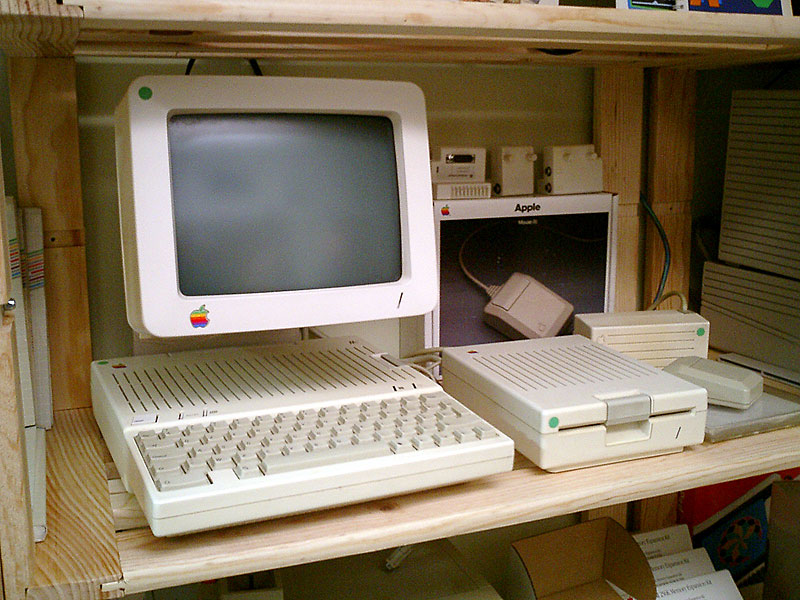
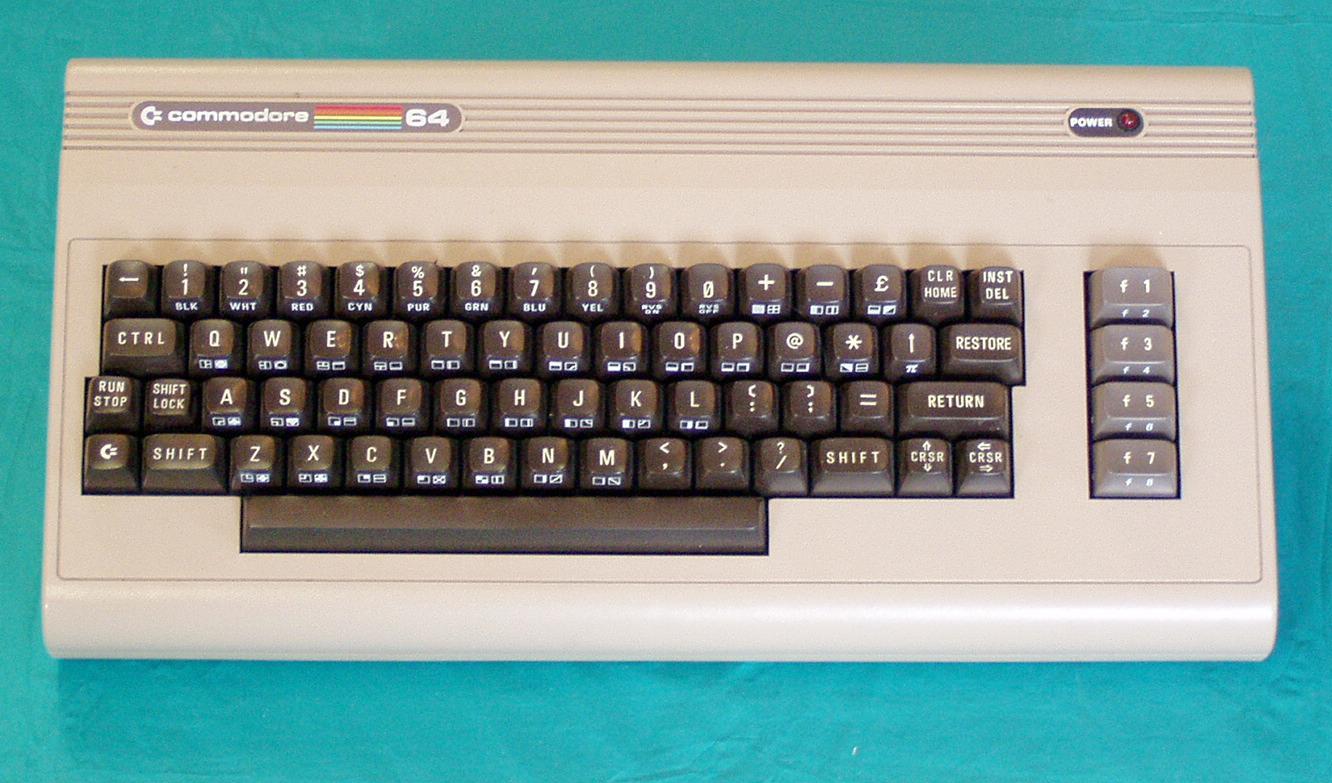
  • Gadgets. Oh, man, did Jim love gadgets. Part of it may have sprung from his love of guitars and guitar amps, and part of it may have been from his love of photography and his near-encyclopedic understanding of cameras and lenses. But whatever—he was extremely fond of all manner of electronics. For a long time he held on to the idea that he would establish or endow a computer museum with his collection of old computers. He held on to ancient hardware, he said, for that purpose. Really, though, I think he just thought that stuff was cool, and he could always remember how cool it all was when it was new, such as his Apple II and his Commodore 64. The last time I saw Jim he had just been given an Arduino that he was eager to check out and start putting together.
  • Photography. This is such a huge topic, and there is no way I can do it justice when it comes to Jim. He had talent for it, to be sure (I am especially fond of his Amateur Physics series), and there was also his work on the Photo Council for the Portland Art Museum, but my personal favorite story was about the time he butted heads with the Photo Council about bringing in Police-guitarist Andy Summers to give a talk about his photography, which had recently been collected and published by a Portland publisher, Nazraeli Press. Jim had had success bringing David Byrne to town to lecture—a big money-raiser for the council—and thought Andy Summers could draw a similar crowd. The Photo Council rejected it as a bit of grandstanding, though, and it was up to Jim to pass the bad news along to Andy. And so it was that one otherwise-quiet afternoon at the office I picked up the phone to hear a British accent on the other end asking for Jim. "Can I tell him who's calling?" I asked, but knowing full well what would come next (I just wanted to hear it): "Sure. It's Andy Summers."
  • Cars and bikes: Know about a car? A bike? Guess what—Jim knew about it, too! And probably what years it was made and when significant engine and body changes came in. As with cameras and guitars, Jim's knowledge was fairly encyclopedic. I spent many hours talking cars and bikes with Jim, though I have to confess I added zero information to any of it. That was another quality Jim had, though: exceptionally tolerant of uninformed opinion for the sake of moving the conversation forward.
  • Guitars, drums, musical instruments: In the leanest years of our publishing days together, Jim and I shared a 7000 square-foot office and warehouse space, just the two of us. That was when the ping-pong table came down and Jim decided to set up a place to play music. He brought in the pieces of the drum kit he was assembling, several of his guitars, a bass, a mic and stand, and some amps. There was a ukulele in there somewhere, too. This was to be our new recreational activity. We got into this habit of talking through a topic that had come up doing with the business, then reach a natural pause. At this point we'd look at one another knowingly and wander to the instruments, flip some switches, and crank out a tune or two. We settled in to Jim was the drummer, and I was the singer/guitar player. The fact is that Jim's guitar playing would have been so much better, but we had to face the fact that my drumming was untenable, even for a really crummy spontaneous jam on some rock standard. The last time I saw Jim play guitar was when he brought out his Lowden at his Christmas party last year to do something he had said he wanted to do for quite a while: Play tunes to accompany my son (unlike me, a musician who could hold his own with Jim) on fiddle. I won't forget the joy of watching those two work the room. Earlier this month Jim had acquired a 1960 Guild hollow body that he was very excited about but in the end only got to play a few days.

There are so many other memories I have of Jim, but mainly I just want to say that working for and with Jim on so many book projects and with so many other people has had this huge, gigantic impact on my life. He showed me a lot of things along the way, but the only thought I'm having right this minute is that I did not learn enough, there was still so much more for us to be doing together.

One word I'll carry with me about Jim, one word that will resonate and sum up my thinking: Creativity.

4.16.2013

Peter Workman: A giant, engaged


If you go look at the Workman Publishing story about the passing of Peter Workman, you will notice something that all of us who ever had any contact with him already knew: Here was a person entirely connected to his work. His work happened to be heading an industry-defining publishing company for nearly half a century, but it was clear to me in the, oh, three minutes that I talked to him, that he was completely active in the process of publishing.

He clearly did not need to be. Workman Publishing was hugely successful from the minute he founded the company, publishing Yoga: 28-day Exercise Plan, which remains in print with sales that are still enviable. Other big successes were the "What to Expect" books for family planning and parental advice, and the "1000 Places to See" series of books. A third of Workman titles has sold more than 100,000 copies. No, the man who founded this company could have checked out long ago, claiming victory into a well-funded retirement.

Among those great successes was the invention of the tear-off daily calendar, the perfect pre-Internet medium for word-of-the-day, fact-of-the-day, cartoon-of-the-day, or the visually driven (and sure-fire hit, naturally) cat- or dog-of-the-day. These calendars, all produced with the Workman Publishing "Page-A-Day" brand, were a revelation in 1979, when the first of them began to hit the bookstore display tables around Christmas.

And that is where I come in. It's a little embarrassing to admit that I knew nothing of the history of these desk calendars when I had the idea to create one from Common Errors in English Usage. It seemed an ideal fit: not word-a-day but usage-point-a-day. And so, sometime in 2005 I developed the Common Errors in English Usage Page-A-Day calendar, filled with 365 pages of entries to be cycled through the course of 2006, each with its own page. We produced a very limited number of these, sort of a market test of 1000 copies. I was entirely ignorant of the fact that the most egregious error appeared right there on the box design and title page.

At some point I learned from a catalog company that would feature the calendar that the "Page-A-Day" label was actually a brand name owned by Workman Publishing. This was a problem. The artwork for the calendar had already been proofed and approved with the printer. Everything was in motion, and the motion needed to stop until this issue got resolved.

I put them on notice at the printer immediately. Fortunately, the calendar had not been produced, but unfortunately there would be delays for another round of proofs, and the schedule was too close for comfort already.

I decided to call Workman Publishing. I expected nothing noteworthy to come of this. Workman, I figured, is huge. It's corporate. I'm going to be tied up for three weeks with this mess, waiting for some legal assistant to get back to me. In short, I'm sunk. I was asking for something that seems silly in hindsight: permission to use the brand free-of-charge for an extremely small run of test-market calendars with the promise to cease and desist thereafter. In times like those, you just take your best shot and go for it.

I was in for a few surprises over the next couple of days. The first surprise was that when I called Workman Publishing, the person answering the phone knew exactly the company policy and had an authoritative answer for me right then and there. She listened to my story, though, and sympathized enough to give me some small hope that I might actually be able to proceed. This was late in the day, though, and she told me I'd have to wait to get a final, definitive answer after she had had a chance to talk to Peter about it.

"What?" I thought . . . talk to Peter about it? What about Legal? Isn't there going to be a Long Process of going through the copyright attorneys and Team of Experts for advice and consent? Hmmm . . . the only thing to do was the wait, and try to do so patiently.

I don't remember waiting long, though. I had to overnight a proof of the box and the title page for review, but it was not more than two days later that the phone rang in the office. The intercom beeped for me to pick up; Peter Workman was on the line.

This was getting surreal. I assumed, maybe, that this was a misunderstanding. Peter Workman could not possibly be calling me. Rather, this was Workman Publishing calling back, and not the actual Peter himself. I picked up the phone and gave one of those slightly garbled, nervous "hellos" you save up for when you meet people that are famous. Indeed, "This is Peter Workman" was the announcement I heard on the line. It was business, but there was no denying the underlying personality there, the charisma that sold a million copies.

I can't recount the whole conversation—I would just be making it up anyway. All I remember is that the answer was "No" to allowing any use of Page-A-Day for a non-Workman product, and that was A-OK with me. He gave bad news with the best of them. He said he needed to protect the brand, but that he understood very well the pickle that put me in. I figured he would know a thing or two about pickles, but there was also an element of "This is Peter Workman telling me I need to solve my publishing problem on my own," and coming directly from the man that was, well, inspiring.

The upshot of it is that the calendar was produced with the generic "Daily Boxed Calendar" label, and went on to appear in print for the next five years, largely with the help of Barnes & Noble, who even produced it with their own publishing imprint the final year that they had a calendar imprint. I worked with many great people there, but there was one huge difference with all the success of the calendar following that initial big flop: I could have never gotten on the phone with a Mr. Barnes or a Mr. Noble.

But don't take my word for it: read the comments at Workman Publishing to get a clearer picture of how engaged this publishing giant was. It spanned every minute of his career, not just the three spent on the phone with me to deliver some bad news in the best way possible.

11.08.2007

I've got a secret

Here at Franklin, Beedle + William, James we are all in a fit of rush preparing for the Wordstock Festival this weekend. Yes, we will be there as always, standing by in our booth ready to meet and greet all comers, and--perhaps--strumming a little on the ukes.

I have fond memories of the first two Wordstocks. The first year we presented visitors to our booth with the Common Errors in English Usage quiz, complete with no prizes, and entered names for a giveaway of the now-famous Common Errors Calendar. We played our rendition of "King of the Road" on ukulele, while discerning passersby noticed we did not modulate for the final verse and chorus (one of Roger Miller's favorite devices for creating the effect of having composed a bridge). At the second Wordstock Festival, we premiered Far from the Madding Gerund, the great collection of Language Log posts by Mark Liberman and Geoffrey Pullum, announced by Geoff himself over at Language Log.

This year, among the many things "Wordstock Is . . ." is a Short Fiction competition. The finalists have been posted on the Wordstock site, and the book, The Wordstock Ten, is available at bookstores all around Portland. A big, gigantic congratulations to the finalists:
Jacob Aiello
K. (Kevin) Fann
Samantha Hudson
Matthew Korfhage
Margaret Malone
Tina M. Ontiveros
Pamela Rentz
Joshua Michael Riedel
Rachel Sims
Jennifer Springsteen
I had the pleasure of working on this collection and with all of these authors as we picked away at the pieces to weed out lingering typos or other last-minute changes, so I don't know if you want to take my word for it. My word, for those still reading, is that I'm very impressed with each of these entries. I will be writing some personal takes on each of these stories in the days to come. Watch this space.

The top prize winners will be announced at the festival this Saturday. There is one way to find out who they are even today, but you must be very attentive and know where to look. And that's as far as my secret goes.

4.16.2007

Tough Times for Icons

Kurt Vonnegut passed away late last week. Naturally, there’s a publishing angle to this story.

Early in 1989, Elvis Costello was going around giving interviews to promote his new album Spike. He had been freshly dropped from his recording contract with Columbia Records and was now hooked up with Warner Brothers. He used the occasion to blast Columbia--not for dropping him, but for having previously dropped Johnny Cash, who was at that time--before he hooked up with Rick Rubin and saved country music--entirely without a record contract. You just don’t do that, EC was saying, you just don’t drop Johnny Cash because he’s not selling like he used to. He’s a legend, an icon.

All these years later, record, film, and book distributors and publishers are, of course, booting out icons left and right. I hope somewhere the fools who edged out EC and Johnny Cash are meeting a bad end. Greeters at the Wal-Mart, maybe. Somewhere, anyway, where they can’t do harm pretending they’re more important than the legendary performers they routinely show the door.


In the case of Vonnegut, he spent the end of his writing career with the independent publisher Seven Stories Press, who also recently lost Art Buchwald from among the icons who, through whatever twists of fate, were no longer suited to the corporate giganto-publishing world of the big release and controlled message. That controlled message drove at least one major publisher, Andre Schiffrin, from head of Pantheon books to form his own independent publishing house, The New Press. In the transition he took many of the authors he had worked with from the start, icons like Studs Terkel.

Vonnegut, Buchwald, Terkel--these are just some of the guys marginalized by corporate publishing.

They do a very good job--those conglomerate publishing houses--cramming bookstore shelves and paid-for display tables with their titles, force-feeding the bestseller lists with books by celebrities and big-name politicos. Integrity, wit, and style, though, just isn’t good enough for them.