Showing posts with label Adventures in editing. Show all posts

12.11.2018

Hyphenating Dilemmas (and Nothing about Baseball)

A front office change over at Fangraphs: Meg Rowley has taken over as managing editor and podcast host at the popular baseball site. Carson Cistulli, who was managing editor and podcast host for years, is moving on to work for the Toronto Blue Jays.

I'm interested in the podcast because I like baseball, but what I've always appreciated is Cistulli's approach to the project. The podcast has never been only about baseball; there has been a fair amount of French philosophy and pop culture in the mix, for example (and trash culture, too, as you could count on professional wrestling to come up now and then).

In the handoff episode, where outgoing host Cistulli played guest to incoming host Rowley, they talked a bit about their disagreements on hyphenation:


I've written about hyphenating previously, but that was an unusual circumstance. Rowley and Cistulli are talking about a traditional rule of hyphenation, one that says you need to insert a hyphen into a compound adjective when placed before a noun, so you're good to go with "grass-fed cows" and "cows that are grass fed."

The case of "front-office decision" vs. "front office decision" is trickier, if you are open to the idea that the matter is open to interpretation. The Chicago Manual of Style has, in recent editions, backed off from their stance that the hyphen rule applies across the board. They now promote leaving out a hyphen if the reader will not be confused. This introduces ambiguity, to be sure, but dropping the hyphen can reduce clutter.

Cistulli makes his case that hyphens can clarify things (is it an office decision that has a front, back and sides, perhaps?), while Rawley believes dropping the hyphen would not cause confusion, so this is a case where it could be dropped.

It's subtle, and most often you just have to go with the traditional rule. Where do I stand on "front-office decision" vs. "front office decision"? Please refer to the first sentence of this post to see.

___________

You will find a good summary of basic hyphenation rules in the Common Errors in English Usage book and on the Web site. You will find interesting discussion on bending and even breaking rules responsibly in Far from the Madding Gerund. Both books are on sale this month—$15 with free shipping.

https://wmjasco.com/william-james-co/8-common-errors-in-english-usage-3rd-ed-9781590282632.html                  https://wmjasco.com/william-james-co/55-far-from-the-madding-gerund-9781590280553.html


7.17.2017

A great question: "If I was" vs. "If I were"

Over in the comments on the calendar site, Reader 13c11a (we don't have readers with uninteresting names) asked a great question:
In the piece below, which is correct--was or were--and why? Thank you very much.
He repeated that he would neither have the IV removed nor let me go. He went on to explain that he could not discharge me because I was in serious condition. I argued that I couldn’t have been lawfully admitted and that I was going to leave. He explained that he admitted me as an emergency and that I was far too ill to leave. I explained that I had two twenty year old cats at home who were expecting me to return on time to feed them. He was a broken record: he would not allow me to leave. I thought this strange because he was half my age. I don’t know why I thought that mattered. It was as though he was/were wearing a badge and I had been pulled over.
  I replied:
What a great question, and that is an engaging and interesting piece of creative prose! I commend you, 13c11a, if this is original to you.
Around here we don't like technical terms so much, so in keeping with  that I'll just say that any time you're talking about something that could never be true you use "If I were," as in "If I were you. . . . " Conversely, it's natural to say, "If I was off course, I wasn't aware of it at the time," because it's entirely possible that you might have been on or off course.
But then it gets slippery, especially since you can't always say it's one or the other. The song goes "If I were a rich man," which is fine. I get it. Tevye in Fiddler on the Roof isn't a rich man, so the statement is not true. But is there a context for "If I was a rich man"? How about "If was a rich man then, I certainly didn't feel it at the time"?
Or how about if Tevye had just plain sung it, "If I was a rich man," with all of his life circumstances just as they are? Would that be so wildly out of bounds? No, not really, because in modern usage the "were" is not required in every case that it could be used. I'd argue no one would bat an eye at "If I was a rich man, all day long I'd biddy biddy bum, if I was a wealthy man."  
Certainly in creative prose you can let your ear guide you somewhat. In my opinion, "It's as though he was" would read better than "It's as though he were" in your passage. I could even argue it is more correct because it strengthens the metaphor of nurse/cop and patient/suspect. That is, if you go with the idea that "If I were" is for cases that are impossible and "If I was" is for cases that may or may not have been possible in the past, you can nudge your metaphor toward the latter interpretation and make the poetic declaration of "He was a cop, and I was his suspect" simply by choosing "was" over "were."
If you do want the technical term, you call this the subjunctive mood, and a good discussion of the point is on the English Language & Usage site.

3.14.2014

Goodbye, James | Goodbye, Franklin

Jim Leisy,
New York 2005
I've written memorials here before. When you're in the biz you have your favorites, you know—people you would like to pay tribute to because they hung on to their integrity while much of the industry would abandon values in favor of an instant buck.

But now I have to write in memory of someone I would so much rather not write up. It's completely loathsome, to be honest. Not that he does not deserve it, don't get me wrong: it's not the person part, it's the "in memory of" part.

William, James & Company was founded as an imprint of Franklin, Beedle & Associates Inc. Both bear the name of their founder, James Franklin Leisy, Jr. The joke in naming William, James & Company was that the imprint was meant to handle English language reference and philosophy, and the founders (Bill Hoffman and Jim Leisy) could contribute the long forms of their first names to play on the great American writer/philosopher William James.

Today we are saying goodbye to the James of William, James and the Franklin of Franklin, Beedle. On his way in to work in Portland Wednesday of this week, Jim suffered a fatal heart attack, and so it was that we in the office had already seen Jim for the final time two days before. If the word were not so overused I'd call things around here "surreal"; I'll opt for "weird" instead.

For myself, I came to work at Franklin, Beedle in late 1992. That company, focused on computer science textbooks for the college market, thrived until a bit after the dot-com bust of the late-90s. It became apparent that it would be wise at that point to diversify a bit, and so Bill Hoffman came over from another publisher to help us start the William, James & Company imprint. The general economy was to go sour just then, as Jim and Bill had agreed to founding the imprint on September 10, 2001. Bill felt he needed to leave at that point to seek stability as an editor for an established press. And so it was that Jim became the publisher of two publishing imprints—one academic and one trade.

But I've always known Jim to be much more than the guy running the company. He had far-reaching interests, and that always made it possible to pick up just about any conversation thread. He had two main interests outside of publishing: photography and guitar. But really he could find himself enthralled by just about anything.

What follows are some random sketches of memories I have of Jim, especially of working together with him all these years. Those who knew Jim will recognize some of this.
  • Ping-pong. When I arrived at Franklin, Beedle in the early-90s, the revolution in the workplace was in full swing, and at FBA that meant there was a full-sized ping-pong table in the center of the office. Lots of space surrounding the table meant the games often became something more than casual. But on late Friday afternoon there was often time for beer pong, as taught to us by an actual fraternity member and graduate of Cal Berkeley. All of this tomfoolery among us editors and salespeople and order processors was endorsed by (and often joined-in-on by) Jim, who resisted stodginess outright at Franklin, Beedle.
  • Social gathering. Was there an occasion to celebrate? An author in town on a visit? A pivotal announcement? These were often marked by Jim-led dinners and lunches, often at some top-of-the-line restaurant or hotel. There was no such thing as business without pleasure (and often vice-versa) with Jim.
  • Music. Jim was a music-on-in-the-background worker by nature. A bit of a jazz-head, he was extra fond of Miles Davis, Pat Metheny, Michael Hedges. For popular music he, like everyone else his age, had a strong Beatles inclination, but he and I really bonded over Steely Dan. The last thing he lent me was his copy of Donald Fagan's Eminent Hipsters, which I returned to him on Monday, the last time I saw him. We had a thoroughly energetic and engaged conversation about the Boswell Sisters and a history of jazz clubs in the Village.
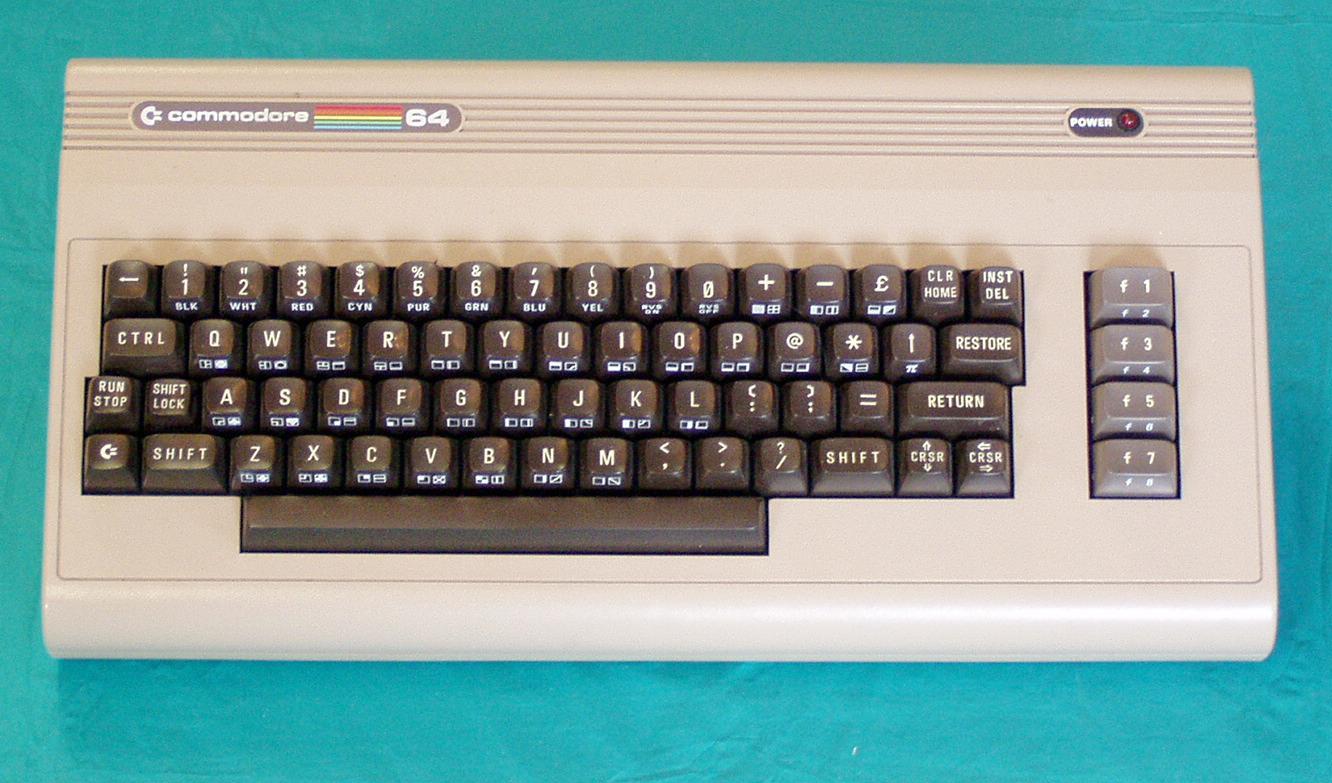
  • Gadgets. Oh, man, did Jim love gadgets. Part of it may have sprung from his love of guitars and guitar amps, and part of it may have been from his love of photography and his near-encyclopedic understanding of cameras and lenses. But whatever—he was extremely fond of all manner of electronics. For a long time he held on to the idea that he would establish or endow a computer museum with his collection of old computers. He held on to ancient hardware, he said, for that purpose. Really, though, I think he just thought that stuff was cool, and he could always remember how cool it all was when it was new, such as his Apple II and his Commodore 64. The last time I saw Jim he had just been given an Arduino that he was eager to check out and start putting together.
  • Photography. This is such a huge topic, and there is no way I can do it justice when it comes to Jim. He had talent for it, to be sure (I am especially fond of his Amateur Physics series), and there was also his work on the Photo Council for the Portland Art Museum, but my personal favorite story was about the time he butted heads with the Photo Council about bringing in Police-guitarist Andy Summers to give a talk about his photography, which had recently been collected and published by a Portland publisher, Nazraeli Press. Jim had had success bringing David Byrne to town to lecture—a big money-raiser for the council—and thought Andy Summers could draw a similar crowd. The Photo Council rejected it as a bit of grandstanding, though, and it was up to Jim to pass the bad news along to Andy. And so it was that one otherwise-quiet afternoon at the office I picked up the phone to hear a British accent on the other end asking for Jim. "Can I tell him who's calling?" I asked, but knowing full well what would come next (I just wanted to hear it): "Sure. It's Andy Summers."
  • Cars and bikes: Know about a car? A bike? Guess what—Jim knew about it, too! And probably what years it was made and when significant engine and body changes came in. As with cameras and guitars, Jim's knowledge was fairly encyclopedic. I spent many hours talking cars and bikes with Jim, though I have to confess I added zero information to any of it. That was another quality Jim had, though: exceptionally tolerant of uninformed opinion for the sake of moving the conversation forward.
  • Guitars, drums, musical instruments: In the leanest years of our publishing days together, Jim and I shared a 7000 square-foot office and warehouse space, just the two of us. That was when the ping-pong table came down and Jim decided to set up a place to play music. He brought in the pieces of the drum kit he was assembling, several of his guitars, a bass, a mic and stand, and some amps. There was a ukulele in there somewhere, too. This was to be our new recreational activity. We got into this habit of talking through a topic that had come up doing with the business, then reach a natural pause. At this point we'd look at one another knowingly and wander to the instruments, flip some switches, and crank out a tune or two. We settled in to Jim was the drummer, and I was the singer/guitar player. The fact is that Jim's guitar playing would have been so much better, but we had to face the fact that my drumming was untenable, even for a really crummy spontaneous jam on some rock standard. The last time I saw Jim play guitar was when he brought out his Lowden at his Christmas party last year to do something he had said he wanted to do for quite a while: Play tunes to accompany my son (unlike me, a musician who could hold his own with Jim) on fiddle. I won't forget the joy of watching those two work the room. Earlier this month Jim had acquired a 1960 Guild hollow body that he was very excited about but in the end only got to play a few days.

There are so many other memories I have of Jim, but mainly I just want to say that working for and with Jim on so many book projects and with so many other people has had this huge, gigantic impact on my life. He showed me a lot of things along the way, but the only thought I'm having right this minute is that I did not learn enough, there was still so much more for us to be doing together.

One word I'll carry with me about Jim, one word that will resonate and sum up my thinking: Creativity.

1.31.2014

All you ever needed to know about the passive voice you learned in kindergarten, assuming Geoffrey Pullum was your kindergarten teacher*

* and you were precocious and paying attention. This post is for the rest of you.

Let's start with the very practical advice Paul Brians provides in Common Errors in English Usage:
There are legitimate uses for the passive voice: “this absurd regulation was of course written by a committee.” But it’s true that you can make your prose more lively and readable by using the active voice much more often. “The victim was attacked by three men in ski masks” isn’t nearly as striking as “three men in ski masks attacked the victim.” The passive voice is often used to avoid taking responsibility for an action: “my term paper was accidentally deleted” avoids stating the truth: “I accidentally deleted my term paper.” Over-use of passive constructions is irritating, though not necessarily erroneous. But it does lead to real clumsiness when passive constructions get piled on top of each other: “no exception in the no-pets rule was sought to be created so that angora rabbits could be raised in the apartment” can be made clearer by shifting to the active voice: “the landlord refused to make an exception to the no-pets rule to allow Eliza to raise angora rabbits in the apartment.” 
Good advice all the way around, stated succinctly and directly. The bad example sentences are improved by switching to active construction, and the passive verbs are correctly identified ("was written," "was attacked," "was deleted," "was sought," "could be raised").

This seems fairly simple: The passive voice is almost always formed by using a form of "to be" with the past participle form of the main verb. In the previous sentence I did it with "is" and "formed."

And as a usage point, note that Paul does not say it is always wrong or bad style to use the passive—it is the writer's prerogative to judge whether the writing would be improved by changing to active voice. Would my sentence in the previous paragraph be improved by changing it to "One forms the passive by using [. . . ]" or "You form the passive by using [. . . ]"? I decided it would not.
The key is to be well aware of what you are doing as you move along in your writing. Blindly prohibiting the passive voice will not improve your writing, but being aware of this construction and its possible overuse could help.

But is that all there is to know about the passive? Well, hardly. Over at Language Log, Geoff Pullum has been tracking this case for years, and he has thought about the passive voice far more than you or I.

What has Geoff found in all this tracking and thinking? I'll give you some highlights, but keep in mind that I'm burying the lede, which will come at the end. If you wish to skip to the end right this minute, you have to promise me you'll read that document thoroughly. If you plan on clicking the link and skimming for a minute or two, I'm sorry—that will not do. You have to at least get through the salient points:
  1. First, there is a shocking amount of misunderstanding about what the passive voice is. You may say, "Well, that's because it's a grammar term and who can be expected to know those?" But Geoff has found one instance after another of "authorities" handing out usage advice without being able to identify a passive. Quick: Name three popular style guides that every writer is familiar with. Chances are you thought of Strunk and White's Elements of Style among those three, but lest you think they know what they're talking about, keep in mind that in that book's discussion of the passive, four example "bad" sentences are provided; but only one of those four is actually a passive. In another instance, Sherry Roberts advises:

    "A sentence written in passive voice is the shifty desperado who tries to win the gunfight by shooting the sheriff in the back, stealing his horse, and sneaking out of town."

    But Pullum, the grammarian, quickly points out that she herself brazenly uses a passive in composing that sentence (the bare passive adjunct
    "written in passive voice"). Many other examples of this transgression have been catalogued on Language Log over the years.

  2. Remember that earlier in the post I claimed that the passive is almost always formed by using "to be" with the past participle form of the main verb. True enough, but there are several other passive voice constructions out there: Geoff gives us "I had the suit made by my tailor in Rome," "He got hooked on skeet shooting," and "This rug badly needs washing," along with Sherry Roberts' "A sentence written [. . . ]," as examples of other kinds of passives.

  3. If someone tells you "My first visit to Boston will always be remembered by me" is a passive to be avoided, and that "I will always remember my first visit to Boston" is active and much better, you are entirely within your rights to remind that person that no speaker or writer of English would consider uttering or writing anything so inane as "My first visit to Boston will always be remembered by me." Geoff calls this the "general information-structure constraint," meaning that in a naturally formed passive, there needs to be new information on both sides of the verb, so the phrase "will always be remembered by me" is completely unnatural because the "by me" information adds nothing to the meaning of the sentence. "I will remember" is the natural choice, and trying to twist this sentence around to create a bad example sentence is disingenuous, but indeed, that is what William Strunk did when composing a passive voice example in an early edition of Elements of Style. Yes, you heard me right: "My first visit to Boston will always be remembered by me" was written by Strunk; it is not a real sentence, naturally formed and then later collected for discussion/examination.

  4. What I'm really getting at is that Strunk and White are shifty desperadoes who try to win the gunfight by shooting the sheriff in the back, stealing his horse, and sneaking out of town.

  5. What is labeled as "passive voice" is often just any old phrase or sentence that some critic decides is weak, an utterance that seems designed to shift responsibility and that often but not always contains a form of "to be." Thus "The election results saddened me" and "There was sadness in the room when we heard the election results" have the patina of passive voice, and so a critic ignorant of grammar may deem either of those passive. But they are not. The first sentence is just a verb with a direct object that happens to be "me"; the second sentence uses "There was"—a phrase that often can be revised for the better, but labeling it "passive" is a mistake. Other times sentences are labeled as "passive" for reasons that cannot be discerned or even guessed at. Geoff points out that the Canadian Press Stylebook labels this sentence as passive:

    "
    The economy experienced a quick revival."

    It is impossible, for me anyway, to see how anyone could imagine that sentence uses passive voice. Another example from a site called Grammarist calls this a passive:

    "
    I urge him to stay in cable, where he belongs."

    I have no idea what "stay in cable" means in this directive (perhaps this is advice to not acquire a satellite dish, or to avoid taking a job at a CBS?) or why "in cable" would be where someone could possibly belong, but I do know that that sentence in no way employs the passive voice.

  6. The passive voice is absolutely required at times; for that reason alone you cannot blindly go about trying to eliminate it. Here's one example from Geoff:

    "The picture you’ve been admiring wasn’t painted by Picasso at all; it was painted by me!"

    Here the one-to-one symmetry of "by Picasso" and "by me" would be lost entirely were the sentence changed to the active "Picasso didn't paint the picture you've been admiring; I did!" Note the lack of rhetorical punch; note how much worse the active is than the passive in this case. How about the ungrammatical-but-effective exclamation "We was robbed!"? The critique, if there is one, is that the verb does not agree in number with the subject—no one in their right mind would try to "improve" the phrase to "The refs robbed us" or "The judge robbed us." It's important to keep that balance of "we" and "robbed" to emphasize the injustice of the situation.

  7. Regardless of advice you may hear to avoid the passive voice, there is no writer, from the towering literary giant to the casual seller on eBay, who never uses the passive voice (an average of 13–17 percent of the time, in fact). A usage "expert" may advise you to avoid it, but doing so would only make your writing less sophisticated than that expert's.
But enough of the highlights. You really ought to go read Geoff Pullum's "Fear and Loathing of the English Passive." You will learn about several other situations that guide the use of passive voice, and you will be deeply horrified and saddened by the incompetence of many would-be usage guides. Yes, the paper is written for an academic journal, but don't let that discourage you—you won't find a more readable paper on an English usage point, and my summary barely scratches the surface—there are many more juicy parts to discover in the original.

1.29.2014

Pete Seeger messes around with English

Pete Seeger, American institution, died this week. He is one of those figures who, even when living, seemed only legendary, like John Henry or Paul Bunyan. How could any person actually have lived the life he actually lived?

But since he did actually live, I had the chance to see him perform a few times. I attended one concert in California and one performance in DC, but most memorable for me was a free concert I saw him give in 1985 in New Paltz, NY, not far from his home in Beacon along the Hudson River. There he was in his element, and it was there he handed out a flier with one of the more memorable puns I've come across.

Here's the set-up: In 1985, the Nuclear Freeze Movement was at its peak, and there was a unique march upcoming in Washington, DC. Across the country peace activists had created 36-inch cloth panels that could be tied together at the ends. The goal was to extend the panels around the Pentagon, the Washington Monument, and the Lincoln Memorial—the effect of which can be seen on the cover of the book about this march:


Other example panels can be viewed on the Mennonite Life site, and you can read a Schenectady Gazette news story that mentions Pete Seeger in its coverage.

In preparation for the event Pete handed out a flier to us concert-attendees describing the project. In the flier was included this description:
It's a Frieze Movement, sew to speak.
. . . which I have never forgotten as an excellent example of Pete's sense of humor and appreciation for great language.

And over at the Visual Thesaurus, they also talk about Pete's love of language, as demonstrated by the accompanying video, "English Is Crazy."


1.16.2014

Now iAvailable: Common Errors in English Usage Third Edition on iTunes

UPDATE: This iBooks edition is available for your Macintosh computer or your iPad only; as of now the iPhone will not allow you to view this book on your phone.


Everybody sing along! There's a new item available on iTunes (click to enlarge):


And though I'm told we are selling less than Beyoncé and it is less danceable than Pitbull, we still like it a lot.

I will own up to a poor history in creating the e-book version of the second edition. Our initial attempt to create the Kindle edition was met with one of the harshest criticisms I've seen on Amazon, the title of which was "Avoid Kindle version." This review prompted a complete overhaul of the e-book version, maximizing the capability to contain links and other navigational tools. Amazon, I am told, made the updated version available to all Kindle customers of the book.

We got it right the first time, I think, for the third edition. I have it on my own Kindle, and it does work pretty well. I'm not won over completely by the way the book works there, but I believe it takes advantage of the platform.

I will say, however, that our own Jaron Ayres has done the book right—very right—for the book you can now add to your iPad library. This involved many workarounds to get the iBooks Author software to accommodate the many images and links in the book, and in fact Apple technicians also had to work a little magic to get this off the ground.

The results can be seen by opening your iTunes store and searching on "Common Errors in English." You can sample the book before you buy, much like you can stream the latest Katy Perry offering before you add it to your personal library. I can verify that the similarity ends there.

11.19.2013

Learning to spell with Obamacare: Are policies being canceled, or are they being cancelled?

The New York Times put up the headline:
Obama Moves to Avert Cancellation of Insurance
And in the first paragraph reported:
[Obama] announced a policy reversal that would allow insurance companies to temporarily keep people on health plans that were to be canceled under the new law because they did not meet minimum standards. [emphasis added]
Setting aside the policy for a moment, what is going on here? Why is "cancellation" (two l's) correct in the headline, while "canceled" (single l) is correct in the first paragraph? When does the l get doubled, and when does it not get doubled?

It turns out that health care is not the only thing done differently in the UK vs. the US. There is a somewhat obscure spelling "rule" (caveat: there are no completely reliable spelling rules in English) exercised in US English that will help you with seemingly incongruous spellings like "traveled" and "referred."

This is covered over at English-Zone.com:
Rule 1:  Words ending with a Consonant-Vowel-Consonant  Pattern

One-syllable words:
ED =  If the word ends in a CVC pattern, it gets a double consonant + ED.     * note
ING =  If the word ends in a CVC pattern, it gets a double consonant + ING. * note
Examples:


  • ED =   RUB > rubbed, STOP > stopped
  • ING = HOP > hopping,  SIT > sitting

  • *note: Words ending in w,x,y,z do not follow this rule, simply add ED, or ING
    Examples: snow > snowed, box > boxing, play > playing

    Two-syllable words:
    ED =  If the stress is on the first syllable, the word only gets one consonant + ED.
    ING = If the stress is on the first syllable, the word only gets one consonant + ING.
    Examples:


  • visit > visited, open > opened
  • happen > happening,  enter > entering
  • ED =  If the stress is on the second syllable, the word gets a double consonant + ED.
    ING = If the stress is on the second syllable, the word gets a double consonant  + ING.
    Examples:


  • refer > referred,     admit > admitted
  • begin > beginning, permit > permitting
  • I will expand on that explanation a bit. It is not just two-syllable words and "ed" and "ing" suffixes that are affected. In fact, any multi-syllable word and any suffix that begins with a vowel are affected. If the final three letters are Consonant-Vowel-Consonant (CVC) and the accent is on the final syllable, double the consonant if the suffix begins with a vowel.

    Note that "cancel" follows that Consonant-Vowel-Consonant (CVC) pattern, and it is a two-syllable word. Now note what happens if the word ending to add is "ation" vs. "ed":
    cancel + ation = "cancellation"
    cancel + ed = "canceled"
    It is the accent that determines the spelling. The two words are pronounced "canCELLation" and "CANceled," so as the accent moves, the spelling changes.

    There are other similar cases, such as "referred" and "reference"; or "conferred" and "conference." If you know where the accent falls, you'll be able to add the suffix correctly.

    Keep in mind this rule works for US English, but in UK English the doubling of the consonant is far more common, as in "travelling" and "modelling."

    While you're at it, keep in mind that in the US both spellings are acceptable for some words ("cancelling" and "modelling" both make it past my spelling checker); but if you stick to the basic rule, you'll be fine.

    7.17.2013

    Rivera and Shakespeare: Perfect in every way

    Mariano Rivera, the Yankees' closer, is in his 13th and final All-Star Game. 
    I'm a baseball fan, but I usually watch the All Star game anyway. Last night, as Mariano Rivera (soon-to-be-retired legendary Yankee reliever) exited the game to great fanfare and ovation, announcer Tim McCarver made the proclamation: "A man who has never received any criticism of any kind." Lucky old Mariano's mom—little Mariano devoured his vegetables and kept his room inspection-ready every moment of every day.

    It made me think of Shakespeare (writer of plays for the Elizabethan stage). While he lacks a brazen enthusiast on the order of Tim McCarver, he does have his share of defenders. One of them, in hyperbolic frenzy, could feasibly insist that he, too, is "a man who has never received criticism of any kind."

    This came up over at the Common Errors in English Usage Daily Entry blog a couple of weeks ago. The entry was specifically about the expression "between you and me" vs. "between you and I," with a preference for the former in standard usage. A commenter protested—rightly, perhaps—the softness of the recommendation:
    Are you really saying that "between you and I" is vaguely acceptable? Does that mean that "They gave a gift to I" is also vaguely acceptable? However will we teach anyone the rules of grammar if we allow the inclusion of another person to permit "I" as an objective case pronoun?
    I followed up with a comment to the effect that while English grammar requires the objective case, me, when following a preposition, in English usage there are plenty of well-educated native speakers of English who naturally say "between you and I." In written English the numbers are strongly in favor of "between you and me," but even there someone could play the Shakespeare card, noting that the Bard himself wrote in The Merchant of Venice, "All debts are cleared between you and I."

    Whether he deserves it or not, Shakespeare gets all kinds of slack when it comes to grammar. It may be that grammar as we know it was not codified in Shakespeare's day, it may be that Shakespeare was very self-aware in his preference for usage over structure, or it may be something else. But there are many instances of Shakespeare engaged in usage that seems quite incorrect to us. The essay linked to above points to expressions like "more fitter" and "most unkindest," plus a seeming lack of nominative and subjective case sense to distinguish "who" from "whom."

    This really comes down to the grammar vs. usage dichotomy, which actually is not normally a dichotomy at all. English usage and English grammar are quite often one and the same. But there are times you just have to play it as it lays [an ungrammatical use of the verb "to lie"] and let a feel for proper usage, rather than formal grammar, be your guide. In other words, loudly and proudly announce "It's me!" and not "It is I" when you arrive home from work tonight. Really, really do that, because there really are times good grammar will destroy you.

    So by all means, study the structure of grammar, but if you never want to receive any criticism of any kind, you need to understand English usage.

    5.10.2013

    One of those usage guidelines that refuse(s) to be pinned down . . .

    The Common Errors in English Usage entry for May 9 was this:
    one of the (singular)
    In phrases like “pistachio is one of the few flavors that appeals to me,” I think you should use the singular form for the verb “appeals” because its subject is “one,” not “flavors.” However, note that usage experts are all over the place on this subject and you’re not likely to get into much trouble by using the plural, and some authorities absolutely prefer it.
     . . . which elicited a well-founded rebuttal from a commenter explaining the reasoning of usage experts alluded to in the entry itself:
    Tom, I have to disagree. Here the subject "flavors," though a genitive in the main clause, governs the verb "to appeal" in the relative clause as subject. The singular formulation is rare in literature before the later twentieth century, for example, and for good reason. It's also nonstandard in other Indo-European languages, to the best of my knowledge. This is essentially a mass malapropism caused by attraction between the end of the main clause and the verb in the relative clause. It's now dominant, but it's just as wrong as "between you and I" (also arguably dominant and endlessly parroted).
    I put up a clarification reply, pointing out—as I'm wont to do—that I am not the author of the entries but rather the editor of the book based on the Web site that supplies the entries for this blog, but that I agreed that the original advice was solid: Using the singular verb "appeals" should not cause any problems with a sophisticated audience of native speakers of English. I don't mean to insult anyone who thinks otherwise, but modern popular usage in edited sources does back me up on that. The commenter asserts that using the singular verb in this sort of construction is "dominant." I don't have enough access to a reliable corpus to know whether this is true, but it is certainly not uncommon.

    I think it is worth adding that the commenter is correct, and the entry should clarify that the formal subject of "appeals" in the example sentence is not "one"; it is "that," and "that" as a relative pronoun refers to "flavors" rather than "one."

    Nevertheless, there is a history of writers treating "One of those [ _____s ] who/that" sentences as singular. Obviously, this creates problems for critics who would have sophisticated language usage governed strictly by formal grammar, but there is a rhetorical term for this notion that goes back to the Greeks, "synesis," which describes the phenomenon of determining gender or number agreement based on the general sense of a sentence, and not strictly in terms of formal grammar. I agree with Webster's Dictionary of English Usage that here we have an example of synesis, or as they call it, "notional agreement" at play. Webster's goes further, pointing out that Joseph Addison and others have not strictly adhered to using one form or the other. This need not be incongruous if you stick to an overarching principle of choosing the verb form that best represents the sense you are trying to communicate. In the case of the "pistachios" example sentence, selecting "appeals" over "appeal" reinforces the singularity of one person's opinion being expressed and the small number of flavors that appeal to that person.

    Having said all that, and having thought this over a bit more, I will continue to refrain from batting an eye when I see this sort of construction in print or pricking up my ears when I hear it used on NPR or anywhere else. Nevertheless, there is one case where I am certain I would choose the plural verb every time: When taking a standardized test on grammar. Those devices are notorious for enforcing formal grammar over practical usage.

    4.16.2013

    Peter Workman: A giant, engaged


    If you go look at the Workman Publishing story about the passing of Peter Workman, you will notice something that all of us who ever had any contact with him already knew: Here was a person entirely connected to his work. His work happened to be heading an industry-defining publishing company for nearly half a century, but it was clear to me in the, oh, three minutes that I talked to him, that he was completely active in the process of publishing.

    He clearly did not need to be. Workman Publishing was hugely successful from the minute he founded the company, publishing Yoga: 28-day Exercise Plan, which remains in print with sales that are still enviable. Other big successes were the "What to Expect" books for family planning and parental advice, and the "1000 Places to See" series of books. A third of Workman titles has sold more than 100,000 copies. No, the man who founded this company could have checked out long ago, claiming victory into a well-funded retirement.

    Among those great successes was the invention of the tear-off daily calendar, the perfect pre-Internet medium for word-of-the-day, fact-of-the-day, cartoon-of-the-day, or the visually driven (and sure-fire hit, naturally) cat- or dog-of-the-day. These calendars, all produced with the Workman Publishing "Page-A-Day" brand, were a revelation in 1979, when the first of them began to hit the bookstore display tables around Christmas.

    And that is where I come in. It's a little embarrassing to admit that I knew nothing of the history of these desk calendars when I had the idea to create one from Common Errors in English Usage. It seemed an ideal fit: not word-a-day but usage-point-a-day. And so, sometime in 2005 I developed the Common Errors in English Usage Page-A-Day calendar, filled with 365 pages of entries to be cycled through the course of 2006, each with its own page. We produced a very limited number of these, sort of a market test of 1000 copies. I was entirely ignorant of the fact that the most egregious error appeared right there on the box design and title page.

    At some point I learned from a catalog company that would feature the calendar that the "Page-A-Day" label was actually a brand name owned by Workman Publishing. This was a problem. The artwork for the calendar had already been proofed and approved with the printer. Everything was in motion, and the motion needed to stop until this issue got resolved.

    I put them on notice at the printer immediately. Fortunately, the calendar had not been produced, but unfortunately there would be delays for another round of proofs, and the schedule was too close for comfort already.

    I decided to call Workman Publishing. I expected nothing noteworthy to come of this. Workman, I figured, is huge. It's corporate. I'm going to be tied up for three weeks with this mess, waiting for some legal assistant to get back to me. In short, I'm sunk. I was asking for something that seems silly in hindsight: permission to use the brand free-of-charge for an extremely small run of test-market calendars with the promise to cease and desist thereafter. In times like those, you just take your best shot and go for it.

    I was in for a few surprises over the next couple of days. The first surprise was that when I called Workman Publishing, the person answering the phone knew exactly the company policy and had an authoritative answer for me right then and there. She listened to my story, though, and sympathized enough to give me some small hope that I might actually be able to proceed. This was late in the day, though, and she told me I'd have to wait to get a final, definitive answer after she had had a chance to talk to Peter about it.

    "What?" I thought . . . talk to Peter about it? What about Legal? Isn't there going to be a Long Process of going through the copyright attorneys and Team of Experts for advice and consent? Hmmm . . . the only thing to do was the wait, and try to do so patiently.

    I don't remember waiting long, though. I had to overnight a proof of the box and the title page for review, but it was not more than two days later that the phone rang in the office. The intercom beeped for me to pick up; Peter Workman was on the line.

    This was getting surreal. I assumed, maybe, that this was a misunderstanding. Peter Workman could not possibly be calling me. Rather, this was Workman Publishing calling back, and not the actual Peter himself. I picked up the phone and gave one of those slightly garbled, nervous "hellos" you save up for when you meet people that are famous. Indeed, "This is Peter Workman" was the announcement I heard on the line. It was business, but there was no denying the underlying personality there, the charisma that sold a million copies.

    I can't recount the whole conversation—I would just be making it up anyway. All I remember is that the answer was "No" to allowing any use of Page-A-Day for a non-Workman product, and that was A-OK with me. He gave bad news with the best of them. He said he needed to protect the brand, but that he understood very well the pickle that put me in. I figured he would know a thing or two about pickles, but there was also an element of "This is Peter Workman telling me I need to solve my publishing problem on my own," and coming directly from the man that was, well, inspiring.

    The upshot of it is that the calendar was produced with the generic "Daily Boxed Calendar" label, and went on to appear in print for the next five years, largely with the help of Barnes & Noble, who even produced it with their own publishing imprint the final year that they had a calendar imprint. I worked with many great people there, but there was one huge difference with all the success of the calendar following that initial big flop: I could have never gotten on the phone with a Mr. Barnes or a Mr. Noble.

    But don't take my word for it: read the comments at Workman Publishing to get a clearer picture of how engaged this publishing giant was. It spanned every minute of his career, not just the three spent on the phone with me to deliver some bad news in the best way possible.

    2.22.2013

    Sure it's no good, but is it non-grammatical?

    In an otherwise stellar take-down of the state of affairs when it comes to Big Food and our federal government, Mark Bittman writes this:
    But her most public work, the 2010 document called “The Surgeon General’s Vision for a Healthy and Fit Nation,” has a decidedly mild Michelle Obama-ish tone. In discussing the obesity crisis, it lays the blame squarely at the feet of … the victims: “In addition to consuming too many calories and not getting enough physical activity, genes, metabolism, behavior, environment, and culture can also play a role in causing people to be overweight and obese.”
    Put aside the imprecise, non-grammatical writing. Instead of talk about curbing the marketing of junk to children, we get a discussion of “limiting television viewing”; instead of banning soda from schools, we get “Make sure water is available throughout the school setting.” In short, instead of criticizing the industry for peddling and profiting from poison, it criticizes us for falling prey to it. [emphasis added]
    That is, Mark claims to have found a sentence composed by the surgeon general to be ungrammatical. But please reread that sentence:
    In addition to consuming too many calories and not getting enough physical activity, genes, metabolism, behavior, environment, and culture can also play a role in causing people to be overweight and obese.
     . . . and let me know if you find an error in the grammar of it. Specifically, here is what I see as the bones:
    In addition to ___________, genes, metabolism, behavior, environment, and culture can also play a role in causing people to be overweight and obese.
    If I filled in that blank with a single-word noun, such as "overeating," I bet Mark would never label it ungrammatical. The question remaining is whether the phrase used in the original sentence acts as a noun phrase that could work as a noun. Here it is:
    consuming too many calories and not getting enough physical activity
    This phrase acts as what is commonly called a gerund phrase. A grammar expert—a real grammar expert—would, I know, be able to tell you more specifically about how this operates in the sentence, but the basic description of "gerund phrase" is good enough for our purposes: A gerund phrase begins with an "ing" verb acting as a noun. In this case the two conjoined gerund phrases are "consuming too many calories" and "getting enough physical activity" with the second of them negated by the "not" prefixed to it.

    The opening phrase works just fine as a noun, and the sentence should not, therefore, be construed to be non-grammatical. So far, so good, but let me conjecture a little more about Mark's thinking and say a word about one thing that may contribute to what people judge as bad writing.

    When I first read that sentence, I messed up the "In addition to" part and started trying to read the first part of it as a modifying participle phrase. In fact, the very same phrase could be used that way in a sentence like this:
    In addition to consuming too many calories and not getting enough physical activity, Jared watches too much TV and has poor dental hygiene.
    And if you read the surgeon general's sentence that way, you start trying to make this phrase into a dangling modifier, as if it were "genes" that were "consuming too many calories and not getting enough physical activity." It is possible Mark is referring to that sort of problem when he calls it non-grammatical, but I think it's more likely that Mark is just using non-grammatical as an umbrella term for "bad writing," and this sentence surely is an example of that.

    To make this a better sentence, the confusion created by the opening phrase needs to be eliminated. There is more than one way to do that; here is just one possibility:
    Consuming too many calories and not getting enough physical activity can contribute to weight problems. Other factors could be genes, metabolism, behavior, environment, and culture.
    That is still not great, but it does the job of making it easier on the reader. I think it puts it more clearly into the realm of what people might call bad writing (isn't "not getting enough physical activity" synonymous with "behavior" in this context, e.g.), but those critics would not actually call it non-grammatical.

    Mark's other complaint—that the information in the sentence is imprecise—has not been addressed, but if I wanted to be snarky I could shoot back: You say it's imprecise. Could you be more specific?

    I wrote more on the topic of using grammar as an umbrella term for usage problems here.

    1.18.2013

    Who that? (And other non-errors)

    Over there on Facebook came a very good usage question:
    http://public.wsu.edu/~brians/errors/adopted.html

    In the post linked above, on what I'm assuming is your website, there is a sentence that says, "Adaptive parents would be parents that could adapt themselves to changing circumstances." Regardless of whether the website is yours or not, could you please explain the reasons for referring to the parents as "that," instead of "who"? I learned that people should always be described using the word "who," and that only objects should be described using the word "that." Either this is incorrect information, or there is an error on this web page.
    And I was a little surprised that I could not find this addressed directly on the main page for Common Errors in English Usage site. That was not a problem, though, because it was simple enough to find authoritative information, with references, on other sites. I replied:
    I was also taught that at some point, but people that teach it that way are not informing you fully. "Who" in such situations is never wrong, but "that" is also correct. Here are two excellent explanations:
    http://www.copyediting.com/it-s-all-relative-using-and-who-correctly


    and


    http://grammar.quickanddirtytips.com/who-that-it-he-she-people-animals.aspx
    If I had been thinking straight, though, I would have remembered the Non-Errors page of the Common Errors site. A quick scroll down takes you to this explanation:
    Using “who” for people, “that” for animals and inanimate objects

    In fact there are many instances in which the most conservative usage is to refer to a person using “that”: “All the politicians that were at the party later denied even knowing the host” is actually somewhat more traditional than the more popular “politicians who.” An aversion to “that” referring to human beings as somehow diminishing their humanity may be praiseworthily sensitive, but it cannot claim the authority of tradition. In some sentences, “that” is clearly preferable to “who”: “She is the only person I know of that prefers whipped cream on her granola.” In the following example, to exchange “that” for “who” would be absurd: “Who was it that said, ‘A woman without a man is like a fish without a bicycle’?”*

    *Commonly attributed to Gloria Steinem, but she attributes it to Irina Dunn.
    In any case, the point remains the same: Slavishly using "who" to refer to people will not be wrong, but "that" is also acceptable. People that insist otherwise are less than fully informed.

    One last point to clarify: To address the "on what I'm assuming is your website" part of the question, the Common Errors in English Usage site is written and maintained by Paul Brians, while I, Tom Sumner, maintain the Common Errors in English Usage Daily Entry blog and the associated Facebook page. When you see replies to comments on the Facebook page, please do not blame Paul for those. On the blog you are now reading—to which we both contribute—you need to check the bottom of each entry under "Posted by" to find out who wrote each piece. Our usage advice is very nearly perfectly aligned, but there can be subtle, mostly trivial differences on controversial points.

    12.11.2012

    How to verify standard English usage: an explicit guide


    I received an interesting question from a reader of the Common Errors in English Usage book:

    In the book "Common Errors in English Usage. On page 22... "aswell/as well"
    The sentence: "I don't like plastic trees as well as real ones for Christmas."
    Shouldn't the sentence read: "...as much as real ones." ??
    Do we ever say. "I like something very well." ??.
    It is a good question because though it is perfectly acceptable to say "I like sweet potatoes very well," it is indeed more common to say "I like sweet potatoes very much" and far more common to say "I like sweet potatoes a lot."

    But take the question at face value. Since it is a bit uncommon to hear "well" used in this way, how can you verify that the usage is employed by sophisticated users of the language? It's always tempting to search the Internet, of course, but the immediate problem is that very little published on the Internet is edited, so a straight Google search is a poor strategy for seeing how "standard" a particular usage is.

    It is for this reason I like Google Book search. Ever try it? If you are on the Google home page, you can get there by clicking More on the menu bar:


    and then selecting and clicking on Books:


    And now when you do your Google search, you will be sifting through results from the extensive library of books that Google has scanned. In other words, everything you see will be from an edited source. You can go to Google book search directly here: http://books.google.com/bkshp?hl=en&tab=wp.

    The trick is to get the search term right. For this part I recommend putting a phrase in quotation marks so that the results will be relevant. In this case, it works to put "like very well" in quotes. This at least gets you started, and the results show you that, in fact, there are plenty of examples of this construction. Naturally, you need to look at some of them to see if they are directly applicable to your question.

    In this case, the results had an extra element of interest, since I noticed that on the first page, the returns are dominated by a passage from Samuel Pepys, and the other returns were also at least a century old. In other words, this actually looks like a disappearing construction.

    Still, it lives on mainly by its negation. When I change the search term to "don't like very well," the results get much more contemporary.

    This intuitively makes sense: I would be far more likely to say "I don't like sweet potatoes very well" as opposed to "I like sweet potatoes very well." There is some nuance in usage, but the point is not to decipher all that, the point is just to verify that the usage is common enough and contemporary enough in edited English usage. And the results are in: Yes, a Google book search verifies that "I like sweet potatoes very well" is perfectly standard usage.

    That takes care of the syntax. Now for the semantics of the matter, I would add, finally, that yes, I do like sweet potatoes very well. In fact, they were on the menu for dinner just last night.

    12.06.2012

    The Artist

    I just realized that over there on Facebook, Language Log is using an image I created a few years ago as their profile cover. Geoff Pullum had thought a visual representation of Language Log might work as something to be incorporated into the cover for Far from the Madding Gerund, whose type is incorporated into that Facebook profile cover also.

    I'm very happy to have something I did featured like this, and hey—it looks pretty good to me. How would I know, though? I'm not an artist. I have some friends and acquaintances who are very serious and talented and successful, but I am only very lightly any of those three things. Required. To be an Artist.

    That does not keep me from doing stuff, though. I came into book editing at exactly the time that computers started making layout work doable by the masses (I was, and still am, a mass), and so part of my duties in book production for a small publisher has always been design work, often creating book covers and ad pieces. Some of this work has been passable, including that cover for the Language Log book, Far from the Madding Gerund. Some of it has been hasty and quite uninspired, like a cover I generated in one 30-minute stint before going away on vacation:


    I left instructions to use this type as a possible basis for creating something else that could actually be the actual cover. When I returned from vacation the book had been shipped to press with the cover more or less exactly how I had created it, including using color swatches entirely from the readymade palette that ships with Adobe Illustrator. The book went on to sell more copies than any other book we have ever done. Art, you see, doesn't matter much when it comes to selling books about computing.

    For another Windows book, I created something I liked pretty well but never used or even showed to anyone:


    I think it looked too fun, though. I once was told to make sure the cover never looks more fun than the book really is, and that's probably good advice.

    I've created dozens of book covers over the years, and part of the reason I know I'm not an artist is that it is never torturous for me. I always enjoy it, even when it is clearly not going well at all.

    Back to Language Log—I had a few other visualizations for what Language Log Plaza might look like:


    All of this is true—I am not a serious artist and only consider myself a designer when it is professionally expedient to do so (I'm a book editor, that's my self-definition)—but what is really, really true is that I have no skill as a photographer, and yet (another Language Log tie-in), I am very proud that my photograph of Mark Liberman is the one that shows up on the side when you Google Mark's name: 


    Which has the background knocked out. The original photo, taken at pod in Philadelphia, looks like the one you see on the left side of the row of Mark Liberman images:

    12.03.2012

    The only occasionally nefarious dictionary editor


    Ben Zimmer, a guest author featured in Far from the Madding Gerund, writes a piece in today's New York Times that reminds us dictionary making is slow, methodical, scholarly work, and not produced by "cloak-and-dagger cabals full of deep, dark secrets." Ben tells us:

    As an informal (and unpaid) consultant for the O.E.D. for the past several years, I had to chuckle at the breathless reporting. The O.E.D. has long kept filing cabinets full of citation slips for words under consideration, though nowadays the work is mostly done online. There is nothing surreptitious about it — it’s all part of the mundane work that lexicographers do to keep track of how words and phrases develop over time, in order to shape and revise their entries. If you saw how dictionary editors actually went about their day, you’d quickly understand why Samuel Johnson famously defined “lexicographer” as “a harmless drudge.” 
    Ben's piece is great (as usual for him), but something I originally learned from Nathan Bierma is actually pretty scandalous: There is a tradition of making up entries while producing encyclopedias and dictionaries. The reason for it is to trap would-be copyright thieves; that is, you know someone stole from you if the information they are passing off as their own has only one single (false) source, and that source is your encyclopedia or your dictionary. You can learn all about it by searching on the word esquivalience. The New Yorker wrote up one famous example of the fountain designer Lillian Virginia Mountweazel.

    11.30.2012

    Little Year

    My goodness, there is a lot of good press about Anna Keesey's novel, Little Century.

    My goodness, there is a lot of good press about Anna Keesey.

    There is a very good reason for that: Little Century is great, and Anna ain't so bad herself.

    I'll start with the book, commenting on some things I noticed about it that have not been commented on elsewhere. Sure, the sentences deserve all that praise, and I will get back to one of them in particular—but first:

    Esther Chambers, a young 18, loses her mother and is orphaned. She flees the city and goes out into the rural wilds, where it is animals as much as humans who inhabit the landscape. I'm looking at the archetypal story here and thinking fairy tale, and in fact the spare wind-swept landscape of eastern Oregon is so richly described it may as well be dense forest. But then hard facts, and careful depiction of hardscrabble frontier life get in the way of this reading. I quickly had to abandon that approach to the narrative and get used to the idea that the abandoned homestead Esther takes on will provide, but there will be no magic there. The work will be real, difficult, and largely lonely.

    It was a comfortable enough transition for me to live in Oregon's high desert with cattle ranchers competing with sheep farmers for what merely appears to be unlimited space and resources. Esther is a saint, a young innocent of the prairie when she arrives. She grieves over her mother properly and only expects the best when she encounters the locals, who are scarce by comparison to her native Chicago. Her distant cousin, Ferris Pickett ("Pick"), is her guide to the area. It is he who arranges her homestead—a shady deal—and her horse and her cabin.

    From here the story is a slow build, not that there is anything wrong with lush description of local scenery and characters. A longish first act of the book is devoted to setting this scene before things  get juicy, starting with some good old-fashioned prairie sex and developing love interest(s) for Esther. But soon our burgeoning Romance-on-the-Western-Plain novel gives way to a rather dramatic clash between the sheepmen and the cattle ranchers. With Pick, Esther has family and love interest with the cattle ranchers, but her other interest is in a shepherd. She's our central figure, she's the one we go with, and thus we, too, straddle the divide.

    It is hard to say more about the story that develops from here without ruining it for those who will be reading it. I'll hold back on specifics, but I'd like to inject something that I have not seen in other reviews—the mystery that develops is worthy of the best of the genre: Ruth Rendell, Ross MacDonald, you know the type—the humanity of the characters drives each revelation, and the complexity of the story rewards you for having paid attention to details earlier and punishes you for lapses. Esther's coming of age as a detective with intuition to match Philip Marlowe's is a surprising and delightful turn. When she loses her homey, sewing-and-farming-and-cabin-tending ways, when she quits just going gooey when she gets to know a Real Man Out West, she turns into her real, far more interesting and clever self. And so, when she enters an empty store she should not and later is hunted by a killer while she melts away ice to reveal a final clue to his guilt, the earlier scene-setting and character development pay off in this later real, dramatic tension.

    So there you have it—I offer a little Dashiell Hammett to the mix of writers Anna has been compared to. Willa Cather seems straightforward enough, given the setting, and Marilynne Robinson is also there, given the sentences and the poetic denouement-by-negation that echoes the final sentence of Housekeeping (but because of the drama in the story, Little Century will make a better movie, alas). But don't be fooled by the sentence-praising masses: by the time you get to the end of the story, the pages cannot be turned quickly enough and the delicate construction of the prose is the last thing on your mind.

    But let's stick with sentences for now, because I would like to say that I wrote one once. It was, oh, several years ago, let's just say. It involves Anna, her novel, and Merlin Olsen. It was, if you follow the resume presented for Anna in the press, her lost year, the unassigned time between the two degrees in her mini-bio: "Anna Keesey is a graduate of Stanford University and of the University of Iowa’s Writers’ Workshop."

    Among many other things that year was for me, it was the year I got to know Anna Keesey. A more general description would call it the year after we had finished those commercially useless undergrad English lit degrees—I at Berkeley and Anna at Stanford—and parlayed them into something they really were never meant to be: A Marketable Commodity, a teaching credential—in this case issued by the Bay Area Writing Project at UC Berkeley. We were among a coterie of 30 young student teachers—many of them bright and some like me—all fulfilling the California state requirement of a fifth year (yes, it is actually referred to as a "fifth year"; it is that thing with no degree title attached to it, required after four undergraduate years in some states, including California, for acquiring teaching credentials). In some ways, I like how this phrase mirrors another: "fifth wheel."

    Anyway, we spent the year taking a variety of education courses and going out to local schools to work with mentor teachers and subject unsuspecting local middle- and high-school students to the missteps of a recent college grad. There was also a writing workshop sandwiched between the two semesters. In the course of that workshop, I wrote my sentence.

    I was lucky with my writing group in that workshop. I was with Grant, a natural writer and intellect with a genuinely enviable easy-going demeanor; Pamela, Patti Smith–obsessed at a time when that had some teeth to it, dammit; and Anna, someone I had already made pals with but whose writing revealed depth that sort of surprised me. I sat there among this talent. I wrote one piece about a foam bed I bought—it was a scream, let me tell you—and then I had to produce something else.

    Trouble is, I didn't have a clue what to write for my second piece. I just kept thinking about that great foam bed. It was winter break. I had just gotten married. I was into lounging, not writing. It was January, and I was still in college. I was watching TV . . . the NFL playoffs. And then something hit me: "Hey," I said, "I've got a great idea. I will write about the NFL broadcast I'm watching and thus combine the thing I want to be doing with the thing I have to be doing." Man, that was original—what a creative thinker I am!

    I thus produced a first draft for my writing group that was certainly not any better than you are imagining it could have been. I filled it with remarks about the TV commentary—pithy, disparaging remarks about the inanity of sports broadcasting. I bet you're sorry you missed it.

    But there, somewhere in this mess of a thrown-together piece, was what I wrote to describe my response to a particularly vapid comment by one of the broadcasters: "I knit my brow at Merlin." Now, I knew when I put that down that it was a cheapie—it doesn't work at all if the broadcaster isn't named Merlin—but why do I care? Brow-knitting writes the check that "Merlin" cashes. That, I said (and still say) to myself, is a sentence.

    The next day, after reading my new piece to the group and some obligatory and genteel remarks from those fine people and my pretending I was interested in hearing how to revise that drivel written solely—solely!— to fulfill a requirement, came the last word on it, from Anna. She  chuckled and looked down at the page, letting out the sentence while shaking her head and smiling: "I knit my brow at Merlin."

    Kinda made the whole thing worth it.

    Much time has passed since that year we started out as Tom and Anna, recent lit grads, and left as Mr. Sumner and Ms. Keesey, ready to report. I never actually taught in high school other than that student teaching gig and a little subbing; I ended up overseas teaching ESL/EFL at colleges. Anna got one of those prime Bay Area English teaching gigs with, if I remember it right, five preps for six classes.

    And then more time passed and we sort of stayed in touch and sort of didn't. Anna always maintained her post as a teacher and writer (but for post-Iowa teaching moved on to creative writing courses at different colleges), but I fell out of it entirely to do this book editing job I still do. At one time I asked Anna to review and help edit a book, which she agreed to do. I also remember talking over dinner one evening, after she had begun to write seriously, about a book she was working on about a family leaving Missouri for Oregon in January 1900. She mentioned them seeing New Year's fireworks while they were traveling. That was more than ten years ago, and now there is Little Century. There is no family, but there is Esther, and Missouri is Chicago. I have no idea what other details remain from that distant past. I think I mentioned that we sort of didn't stay in touch, did I not?

    But all of this is why, reading Anna's book, I focused on one of her own sentences with particular interest. It falls on page 239, and somewhere else for the e-book edition: "She wipes her knit brow with her golden little hand."

    When you read a book by an old friend, arbitrary little connections can come up, and so for me I naturally thought back to a younger Anna having a laugh over "I knit my brow at Merlin," though the context and gravity of Anna's sentence could not be farther from the one I had, well . . . crafted. Still, I felt that knit-brow connection and devoted a little thought to this sentence, coming away thinking that, holy cow, Anna's book really is jam-packed. I picked this sentence, but any reader could pluck any one of a any number of sentences and see how things just really fit together.

    So what is so good about "She wipes her knit brow with her golden little hand"? A couple of things, but start with the obvious: "golden little" is miles better than "little golden," though I'm certain I would probably put down "little golden" and move on, figuring that would do. But that is hardly the end of it, since "golden" itself is a bit curious until you come to know, a few pages later, that the girl thus described, Marguerite, has a previously unknown connection to Pick, who himself has a mustache that is described here and there as golden. Earlier, Marguerite herself had playfully taken a strand of her own hair and drawn it across her lip like a mustache. Such exploration into the text takes me right back to my lit-majoring days, perhaps not so wasted after all.

    And Little Century proves to be a complete novel again and again. You will, for example, be rewarded if you take up Anna on her invitation to contemplate the significance of the war in the Philippines, which operates in the background throughout the story. Yes, the Philippines can be subjugated, but we know now that the U.S. will not win anything by it. Cattle ranchers can likewise successfully drive out the sheep but lose the railroad when chaos ensues. Are there other events over the past hundred years that have similarly refused to produce "winners"? Korea, Vietnam, Iraq, Afghanistan to quickly dash off some obvious ones in the arena of politics and war; it has certainly been an extremely little century.

    And that year I met Anna, and the long time between then and now? Well, that was very little, too.